

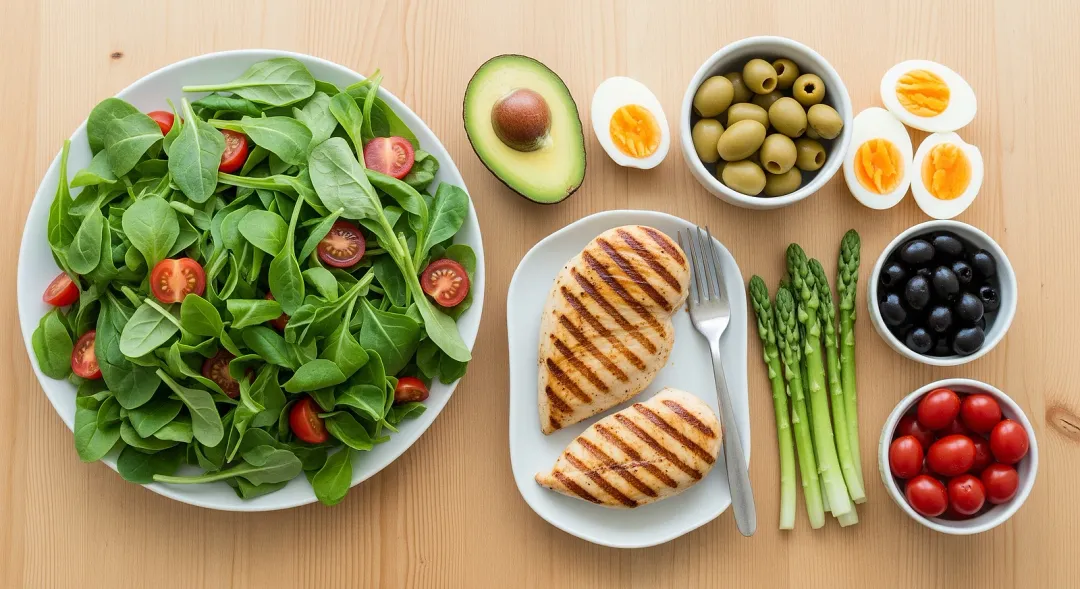

If you've ever noticed that a breakfast of eggs and vegetables keeps you full for hours while a bowl of cereal leaves you hungry by ten, you already understand the heart of low-carb eating. Dialing back on bread, sugar, and refined starch, and leaning into protein, good fats, and real vegetables, is one of the simplest, most satisfying ways to steady your energy and quiet the cravings that run so many people's days.
The best part is that low-carb isn't a rigid rulebook. It's a spectrum, which means you get to find the version that fits your life. This guide walks through what low-carb really is, why so many people feel so good on it, what you get to eat, and how to make it genuinely your own.
What is the low-carb diet?
A low-carb diet simply shifts your plate away from sugars and starches (the carbohydrates found in grains, refined foods, and sweets) and toward protein, healthy fats, and non-starchy vegetables. There's no single official definition, and that's a feature, not a flaw: it means low-carb can flex to you.
Harvard Health notes that many low-carb approaches cap carbohydrates at roughly 26% of daily calories, or under about 130 grams a day, compared with a more typical intake of 225 to 325 grams. Diabetes UK uses that same "less than 130 grams a day" benchmark. At the gentler end, simply swapping refined carbs for vegetables and protein already counts; at the stricter end sit very-low-carb and ketogenic plans. And this is low-carb, not no-carb. There's plenty of room for the vegetables, nuts, seeds, and even fruit that make food a joy.
Why people feel so good on low-carb
The mechanism is refreshingly simple. Carbohydrates raise blood glucose more than protein or fat do, so eating fewer of them tends to flatten the spikes-and-crashes cycle that leaves you reaching for a snack an hour after eating. Protein and fat are also deeply satisfying, so a lot of people find they naturally eat less without ever counting a calorie.
The research lines up with that lived experience. A controlled study of 164 adults reported by Harvard Health found that people eating a 20%-carbohydrate diet burned modestly more energy over 20 weeks, alongside lower levels of the hunger hormone ghrelin. That's a tidy scientific echo of what people describe all the time: feeling fuller and more even on fewer carbs. Beyond the appetite piece, here's what people commonly notice and what the evidence supports:
- Steadier energy and fewer cravings. Fewer blood-sugar swings tend to mean fewer of those mid-afternoon slumps and sugar pulls.
- Easier weight management. Mayo Clinic notes that low-carb diets, especially very-low-carb ones, can produce greater short-term weight loss than low-fat diets. It's a genuinely effective tool in your kit.
- Better blood-sugar balance. Diabetes UK reports that low-carb eating can be a safe, effective way for people with type 2 diabetes to manage weight and blood glucose. A 2025 meta-analysis of 17 randomized trials in Frontiers in Nutrition found low-carb diets lowered HbA1c and fasting glucose in overweight or obese people with type 2 diabetes.
- Friendly heart markers. That same meta-analysis found reduced triglycerides and higher HDL ("good") cholesterol, with no significant change in LDL. Diabetes UK similarly notes short-term improvements in blood fats.
One nuance worth celebrating: quality counts as much as quantity. A 2023 Harvard analysis of more than 123,000 adults found that low-carb diets emphasizing plant-based proteins, healthy fats, and whole-food carbs were linked to slower long-term weight gain. In other words, the most delicious, whole-food version of low-carb is also the one the evidence likes best.
Low-carb vs. keto: what's the difference?
People often use these two words interchangeably, but they're not the same, and knowing the difference helps you pick what fits. A general low-carb diet simply reduces carbs; it doesn't chase a specific metabolic state, so you can still enjoy fruit, legumes, and even some whole grains in moderation. The ketogenic diet is a stricter subset. Cleveland Clinic explains that keto pushes carbohydrates under about 50 grams a day, often paired with 70% to 80% of calories from fat, to shift the body into ketosis, where it burns fat for fuel and produces ketones, usually within two to four days.
For most people, moderate low-carb is the more flexible, more livable choice. Keto can be a powerful tool for specific goals, but it asks for more precision. The good news is that you don't need to be in ketosis to enjoy most of the steady-energy and blood-sugar benefits above. You get to choose how far along the spectrum feels right for you.
What you get to eat
Low-carb eating is generous once you see the plate for what's on it rather than what's off it. You get to build meals around:
- Quality protein: eggs, poultry, beef, pork, fish, and seafood.
- Non-starchy vegetables: leafy greens, broccoli, cauliflower, zucchini, peppers, mushrooms, and more, in real abundance.
- Healthy fats: olive oil, avocado, butter, and the fat that comes naturally with good meat and fish.
- Nuts and seeds: almonds, walnuts, pumpkin seeds, and nut butters for crunch and staying power.
- Lower-sugar fruit: berries especially, which fit comfortably in most low-carb patterns.
Because carbohydrate-rich foods also carry fiber, vitamins, and minerals, the goal is to keep the nourishing plants and simply crowd out the refined stuff. Non-starchy vegetables, nuts, and seeds do a lot of the heavy lifting here, and they make the food genuinely good to eat.
Making low-carb work for you
Low-carb is at its best when it's built around you, not imposed on you. A few practical ways to set yourself up to thrive:
- Ease in at your own pace. If you cut carbs sharply, you may hit a short adjustment stretch, a few days of low energy or headache as your body recalibrates. It usually passes within days to a couple of weeks, and easing in gradually (and drinking plenty of water) makes it gentler. Plenty of people prefer to lower carbs step by step rather than all at once.
- Keep fiber and minerals front and center. As grains and some fruit step back, let non-starchy vegetables, nuts, and seeds step forward so you keep fiber, vitamins, and minerals high. This is where whole-food low-carb shines.
- Lead with whole foods, not "low-carb" packages. The healthiest version, per that large Harvard analysis, is built on whole plants and quality proteins, not processed "low-carb" bars and shakes. Real food first, always.
- On saturated fat, read the whole picture. You'll hear cautions about animal fat and heart risk, and it's genuinely a debated area. A growing number of researchers argue the older story was too simple, and Harvard's own work shows that how you do low-carb matters more than the carb number alone. The grounded move isn't to fear a food group; it's to favor quality fats and whole foods, track your own labs over time, and work with a provider who reads the full panel rather than a single number.
- Partner with your care team when it matters. If you take insulin or blood-sugar medication, are pregnant, or manage a kidney or heart condition, loop in a doctor or registered dietitian as you start. This isn't because low-carb is risky, but because they can fine-tune things like medication timing so the transition is smooth and safe.
How the low-carb diet fits a real-food approach
Low-carb and real-food, paleo-leaning eating are natural allies. Both are built on vegetables, quality protein, healthy fats, nuts, and seeds, and both quietly crowd out refined sugar and ultra-processed carbs. If you already cook mostly from whole ingredients, you're closer to a sensible low-carb rhythm than you might think.
Where they gently differ is in the details. Strict low-carb sometimes limits fruit, sweet potatoes, and legumes that a real-food eater might happily keep, so feel free to keep the whole foods that make you feel good. The Harvard research is a helpful anchor: the healthiest low-carb eating is built on whole plants and quality proteins, not on cutting a number for its own sake. You can go lower-carb without going lower-quality, and for most home cooks that whole-food version is both the most nourishing and the most livable.
Key takeaways
- Low-carb is a flexible spectrum, ranging from gently reducing refined carbs to strict keto, and you get to choose where you land.
- Many people feel steadier energy and fewer cravings, and the evidence supports easier weight management and better blood-sugar balance, especially in type 2 diabetes.
- Keto is a stricter subset (under about 50 grams of carbs a day) aimed at ketosis. It's effective, but you don't need it for most of the benefits.
- Quality is the secret: whole-food, plant-forward low-carb is the version the research likes best and the one that's easiest to love.
- If you take diabetes medication, are pregnant, or manage a kidney or heart condition, partner with a provider to make the transition smooth. It's about support, not restriction.
This guide is for general education and is not medical advice. Everyone's body and health history are different, so talk with your doctor or a registered dietitian before making big changes, especially if you take medication or manage a health condition. They can help you make low-carb work beautifully for you.
Frequently Asked Questions
How many carbs a day is considered low-carb?
There's no single official number, and that flexibility is part of the appeal. Many low-carb diets fall under about 130 grams of carbohydrate a day (roughly 26% of calories), compared with a typical intake of 225 to 325 grams. Very-low-carb and ketogenic plans go lower still, often under 50 grams a day. You get to choose where on that spectrum feels right for you.
What's the difference between low-carb and keto?
A general low-carb diet simply reduces carbs and stays flexible, so you can still enjoy fruit, legumes, and some whole grains. Keto is a stricter subset that pushes carbs under about 50 grams a day, usually with a very high fat intake, to shift the body into ketosis. The happy news: you can get most of the steady-energy and blood-sugar benefits of low-carb without going full keto.
How do I get started with low-carb?
Start by crowding out refined carbs — sugar, bread, and packaged snacks — and building each meal around protein, non-starchy vegetables, and healthy fats. Many people find it easiest to lower carbs gradually rather than all at once, which softens the short adjustment period. Keep water and minerals up, lean on whole foods over 'low-carb' packaged products, and let your own energy and hunger guide the pace.
Will I still get enough fiber and nutrients?
Absolutely, with a little intention. As grains and some fruit step back, let non-starchy vegetables, nuts, seeds, and berries step forward, and you'll keep fiber, vitamins, and minerals high. Research links whole-food, plant-forward low-carb eating to better long-term outcomes than versions built on refined food, so leading with real ingredients does double duty.
Is low-carb good for type 2 diabetes?
For many people, yes. Research and Diabetes UK support low-carb eating as a safe, effective way to manage weight and blood glucose, and it can lower HbA1c and triglycerides. If you take insulin or blood-sugar-lowering medication, loop in your healthcare team as you start so they can fine-tune your doses — that partnership is what keeps the transition smooth and safe.
Is low-carb right for me?
It's a great fit if you feel better on protein, vegetables, and healthy fats, want steadier energy and fewer cravings, or are working on weight and blood-sugar balance. Because it's a spectrum, you can start gently and adjust. If you manage a health condition, are pregnant, or take medication, a quick conversation with your doctor or a dietitian helps you tailor it to you.
Sources
- Mayo Clinic: Low-carb diet: Can it help you lose weight?
- Harvard Health Publishing: Low-carb foods: Nutritious choices for creating a sustainable diet that's lower in carbohydrates
- Harvard T.H. Chan School of Public Health: Low-carbohydrate diets emphasizing healthy, plant-based sources associated with slower long-term weight gain
- Cleveland Clinic: Ketosis: Definition, Benefits & Side Effects
- Diabetes UK: Low-carb diet and meal plan
- Harvard Health Publishing: Can a low-carbohydrate diet help keep weight off?
- Frontiers in Nutrition: The effects of low-carbohydrate diet on glucose and lipid metabolism in overweight or obese patients with T2DM: a meta-analysis of randomized controlled trials
This guide is for general education and is not medical advice. Everyone is different, so talk with your doctor or a registered dietitian before making a major change to how you eat, especially if you are pregnant, managing a health condition, or have a history of disordered eating.








Join the conversation
What do you think?
Free members can comment, reply and like. It takes ten seconds.