

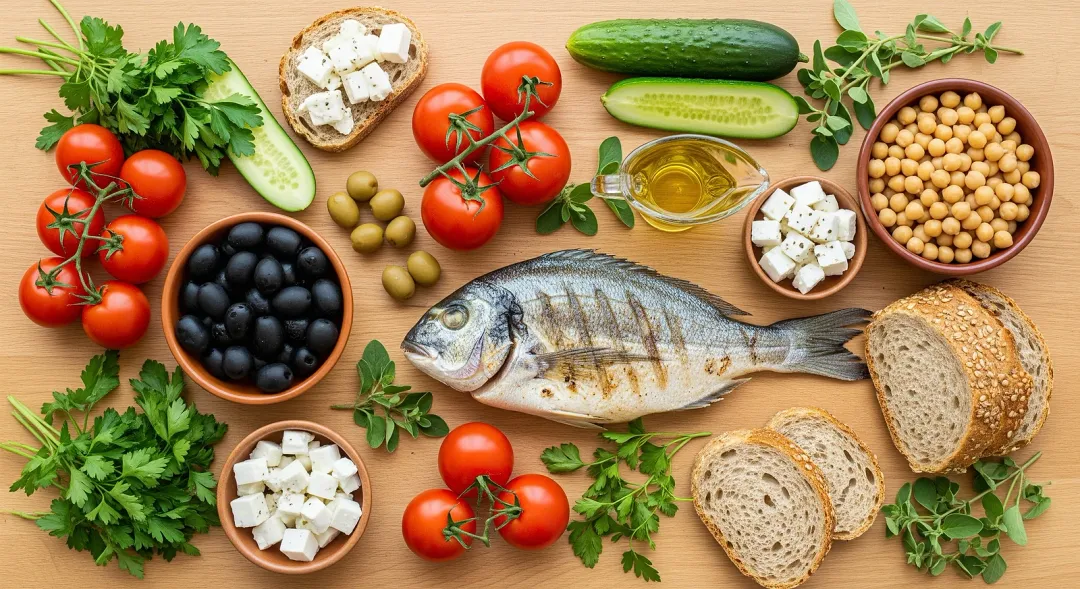

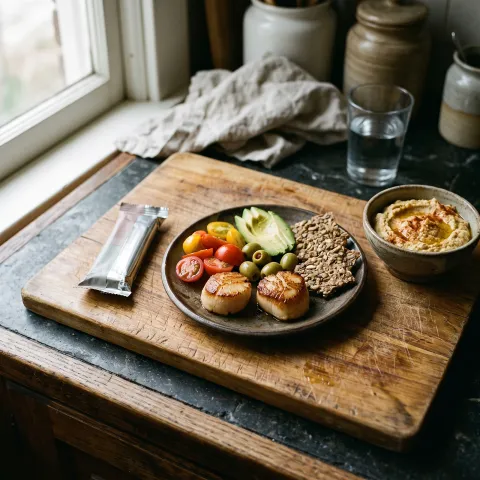
Picture a table on the coast: a bowl of tomatoes still warm from the sun, a plate of grilled fish, good olive oil poured with a generous hand, herbs, olives, a little cheese, friends staying long after the meal is done. That's the Mediterranean diet, and it's less a diet than a way of living around real food. It isn't a cleanse or a 30-day reset. It's a centuries-old pattern built on vegetables, olive oil, legumes, whole grains, fish, and nuts, and it happens to be one of the most thoroughly studied and celebrated ways of eating on the planet.
What makes it so easy to love is that it asks you to add, not subtract. More color on the plate, more good fat, more time at the table. If you're a real-food person already, you'll recognize most of this as home, and the parts that are new are worth getting to know.
What is the Mediterranean diet?
The Mediterranean diet is drawn from the traditional eating habits of places like Greece, southern Italy, and Crete. It was never designed in a lab; it's simply how people ate when they cooked with what grew nearby and shared meals slowly. That's why it feels so sustainable: there's no rigid meal plan and no portion counting, just an overall rhythm that leans on whole, minimally processed foods.
At its heart, extra-virgin olive oil is the main fat, plants make up the bulk of every plate, and fish and seafood are the go-to proteins. According to Cleveland Clinic and MedlinePlus, olive oil takes the place of butter, and vegetables, fruit, beans, and whole grains fill most of the table. It's flexible, forgiving, and built to be kept up for years rather than weeks.
Why people feel so good on it
There's no single magic nutrient here, and that's exactly the point. The good comes from the whole pattern working together. Olive oil, rich in monounsaturated fat and polyphenols, supports healthy blood vessels. Nuts and fatty fish nudge cholesterol and triglycerides in a friendly direction, and the omega-3 fats in fish feed both the heart and the brain. The heavy load of vegetables, fruit, legumes, and whole grains delivers fiber and antioxidants that help keep blood sugar steady and inflammation calm.
All that fiber-rich, plant-forward food is a gift to your gut, too. A clinical reference review from StatPearls notes the pattern encourages beneficial, anti-inflammatory gut bacteria, with measurable shifts in the microbiome appearing within just a few days of eating this way. Harvard experts make a lovely point about this: you can't shortcut it by drizzling olive oil over an otherwise processed meal. The benefit is the full, colorful pattern, not any one ingredient, which is why it feels less like a rule and more like a lifestyle.
What the research says
This is where the Mediterranean diet really shines, because the evidence is unusually strong and consistent, and it's worth celebrating.
- Heart health. The landmark PREDIMED trial found that people at high cardiovascular risk who followed a Mediterranean diet with extra-virgin olive oil or nuts had roughly a 30% lower risk of major cardiovascular events than those on a low-fat diet, with a notable drop in stroke, according to Harvard's Nutrition Source. Longer-term observational work summarized by Harvard Health links the pattern to about a 25% lower risk of cardiovascular disease in women followed over 12 years.
- A long, healthy life. Harvard Health reports that women with the highest adherence had meaningfully lower risk of dying from any cause, and that followers were about 46% more likely to reach age 70 without major chronic disease. That's not just more years; it's more good years.
- Steady blood sugar. In the PREDIMED-Plus trial, older adults who combined the diet with movement had a 31% lower risk of developing type 2 diabetes over six years, per Harvard Health. Both the American Diabetes Association and American Heart Association endorse the pattern.
- Brain health. The diet is associated with a lower risk of cognitive decline and conditions like Alzheimer's and Parkinson's. This research is younger than the heart data, but the early signals are encouraging.
- Weight and metabolic health. People following the pattern were about twice as likely to keep weight off after losing it, and it's linked to friendlier blood pressure, cholesterol, and blood sugar, all without white-knuckle restriction.
One honest footnote, because we believe in reading science with clear eyes: the original PREDIMED study was retracted in 2018 over some randomization issues, then reanalyzed, republished, and the core finding held up. It's a good reminder that strong nutrition science is built on many studies over time, not any single trial, and by that standard the Mediterranean pattern has earned its reputation.
What you eat
Here's the fun part, because this plate is genuinely delicious.
- Vegetables and fruit, generously. Tomatoes, greens, peppers, eggplant, zucchini, onions, plus fresh fruit for something sweet.
- Extra-virgin olive oil. The signature fat, poured over vegetables, whisked into dressings, used for cooking.
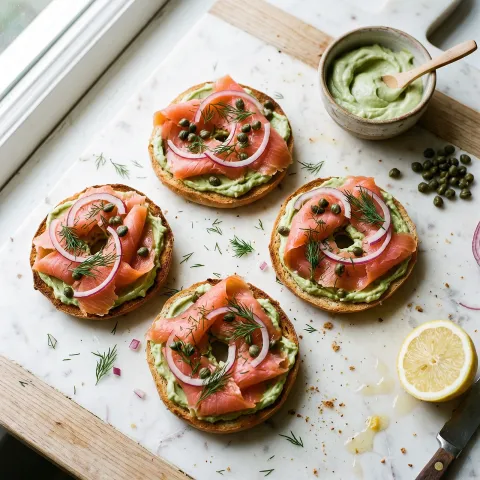
- Fish and seafood. The star proteins, ideally a couple of times a week or more, salmon, sardines, and other omega-3-rich choices especially.
- Legumes and whole grains. Beans, lentils, chickpeas, plus oats, barley, farro, and brown rice for fiber and staying power.
- Nuts, seeds, herbs, and spices. Flavor and healthy fats in every handful, with herbs doing the work salt often does elsewhere.
- Moderate dairy, poultry, and eggs. Yogurt and cheese in reasonable amounts, chicken and eggs as supporting players.
- Wine, optional and modest. Usually with meals, and entirely skippable, more on that below.
Red meat steps back to a few times a month, and added sugars, refined grains, and heavily processed foods are kept light. Notice there's nothing punishing here, just a shift toward whole food and good fat.
Making the Mediterranean diet work for you
The beauty of this pattern is how easily it bends to your life. You don't need to overhaul your kitchen overnight; you can grow into it.
- Start with olive oil and vegetables. Swap butter for extra-virgin olive oil and add one more vegetable to each meal. That single move gets you most of the way there.
- Make fish a real habit. Aim for it a couple of times a week rather than as an afterthought. Canned sardines and salmon count and keep it easy and affordable.
- Choose true whole grains and legumes. If you include grains, reach for oats, barley, farro, and brown rice over refined pasta and white bread. Beans and lentils stretch meals and love your gut.
- Let plants lead, seafood star. Keep cheese and meat as supporting roles rather than the center, and don't lean on cheese as your main protein.
- Mind the generous pours. Olive oil and nuts are wonderful and calorie-dense, so enjoy them with a little awareness if weight is a goal.
- Personalize it with your provider. If you have kidney, heart, or blood-sugar considerations, or you're pregnant, a doctor or registered dietitian can help you tune the details, including skipping wine entirely, which is always a fine choice.
There's no failing at this. It's a pattern, not a test, and every step toward it counts.
How the Mediterranean diet fits a real-food approach
Here at That Paleo Chick, we're real-food-first, and there's an enormous amount to celebrate in this overlap. Vegetables at every meal, beautiful olive oil, wild fish, nuts, herbs, and none of the ultra-processed junk or added sugar? That's common ground, and it's most of the Mediterranean plate.
Where the two ways of eating differ is honest and easy to name: the Mediterranean pattern embraces whole grains, legumes, and moderate dairy, which strict paleo sets aside. Neither is a moral position, just a different read of which whole foods work best for you. Plenty of people feel wonderful on grains and beans; others notice they do better without them. If you love the Mediterranean spirit but lean paleo, you can build a gorgeous hybrid: keep the olive oil, fish, vegetables, and nuts front and center, and decide for yourself where legumes, whole grains, and yogurt fit based on how your body responds. The soul of both approaches is identical, real, colorful, minimally processed food shared without stress.
Key takeaways
- The Mediterranean diet is a whole-food way of living, not a short-term plan, built on vegetables, olive oil, legumes, whole grains, fish, and nuts.
- It carries some of the strongest evidence in all of nutrition for heart health, with growing support for long life, steady blood sugar, and brain health.
- The benefit comes from the full, colorful pattern working together, not any single ingredient, which is why it's so easy to sustain.
- It bends beautifully to your life; ease in with olive oil and vegetables, make fish a habit, and personalize the details with a provider if you need to.
- It overlaps heavily with real-food eating and simply includes grains, legumes, and dairy that strict paleo leaves out, so build the version that fits your body.
- This guide is for general education and is not medical advice; talk with your doctor or a registered dietitian before making a major change to how you eat.
Frequently Asked Questions
How do I start the Mediterranean diet?
Ease in rather than overhaul everything at once. Swap butter for extra-virgin olive oil, add an extra vegetable to each meal, and make fish a habit a couple of times a week. From there, lean on beans, lentils, and true whole grains, and let plants and seafood lead the plate. Small, steady shifts stick better than a dramatic reset.
What can I eat on the Mediterranean diet?
Plenty. Load up on vegetables and fruit, use extra-virgin olive oil as your main fat, and make fish and seafood your go-to proteins. Enjoy legumes, whole grains, nuts, seeds, herbs, and moderate amounts of yogurt, cheese, poultry, and eggs. Red meat steps back to a few times a month, and added sugar and processed food stay light. Wine is optional and easy to skip.
Is the Mediterranean diet good for my heart?
The evidence here is unusually strong. The PREDIMED trial linked the pattern to roughly a 30% lower risk of major cardiovascular events, and major bodies like the American Heart Association and American Diabetes Association endorse it. The benefit comes from the whole plate of olive oil, fish, vegetables, and nuts working together, not any single food.
How is the Mediterranean diet different from paleo?
They overlap a lot on vegetables, olive oil, fish, nuts, and skipping processed food and added sugar. The main difference is that the Mediterranean pattern includes whole grains, legumes, and moderate dairy, which strict paleo sets aside. Neither is wrong; many people build a hybrid and decide where grains, beans, and yogurt fit based on how they feel.
Do I have to drink wine on the Mediterranean diet?
Not at all. Wine is optional, and health authorities advise no one to start drinking for its benefits. Skip it entirely if you are pregnant, have a history of alcohol misuse, or have any condition where alcohol is unwise. The plants, olive oil, and fish do all the heavy lifting on their own.
Is the Mediterranean diet right for me?
For most people it's a friendly, flexible place to start, and it adapts well to vegetarian, gluten-free, or budget versions. It's especially worth considering if you want to support heart health, steady blood sugar, or simply eat well for the long haul. If you have kidney, heart, or blood-sugar conditions, a provider can help you tailor it to you.
Sources
- MedlinePlus (NIH): Mediterranean diet
- Cleveland Clinic: Mediterranean Diet: Food List & Meal Plan
- Harvard Health Publishing: Guide to the Mediterranean diet
- Harvard T.H. Chan School of Public Health (The Nutrition Source): Diet Review: Mediterranean Diet
- Harvard T.H. Chan School of Public Health (The Nutrition Source): PREDIMED Study Retraction and Republication
- StatPearls (NCBI Bookshelf, NIH): Mediterranean Diet
This guide is for general education and is not medical advice. Everyone is different, so talk with your doctor or a registered dietitian before making a major change to how you eat, especially if you are pregnant, managing a health condition, or have a history of disordered eating.

Join the conversation
What do you think?
Free members can comment, reply and like. It takes ten seconds.