

On this page
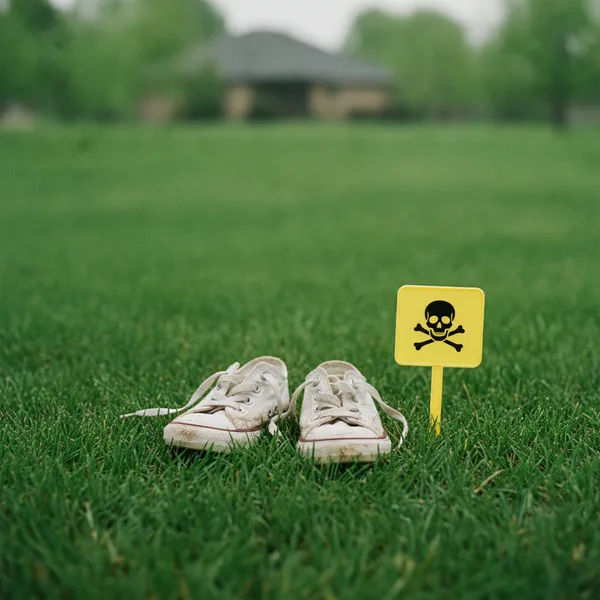
Picture the last time you walked through a neighborhood and smelled that sharp chemical smell after someone's lawn had just been treated. Or the last time you spritzed a flea product on your dog while your toddler was sitting right there on the floor. I want you to sit with that for a second. Because there is now forty years of research stacking up, and it does not say what the chemical companies want you to believe.
Four Decades. Hundreds of Studies. One Brutal Pattern.
A sweeping review of research going back nearly forty years has found consistent associations between pesticide exposure around homes and farms and elevated cancer risk in children, specifically leukemia and brain tumors. We are not talking about one study from one lab that might have had a weird methodology. We are talking about a body of evidence compiled across generations of researchers, published in peer-reviewed literature, pointing at the same thing over and over again. According to reporting from U.S. Right to Know, children exposed to pesticides during pregnancy and early life, through farm proximity, lawn treatments, garden chemicals, and even pet flea and tick products, showed higher rates of these cancers compared to kids with lower exposure. The research covers organophosphates, carbamates, pyrethroids, and other chemical classes that millions of American families interact with every single week without a second thought. Let that sink in. The stuff your neighbor sprays on his grass. The weed killer in the garage. The flea collar on the dog. The aerial drift from the farm up the road. This is not abstract industrial pollution. This is Tuesday.
Why Is This Still on Store Shelves?
Here is where I get blunt, because the question has to be asked out loud. If forty years of science consistently links these chemicals to childhood leukemia and brain tumors, why are they still legal for residential use? Why are they still marketed to families in cheerful packaging at every hardware store in America? The answer, as it almost always is, comes down to money and influence. The pesticide industry is enormous. It funds research, it lobbies Congress, and it has deep, structural relationships with the very regulatory agencies that are supposed to protect us. The EPA has repeatedly delayed, weakened, or reversed restrictions on pesticides under pressure from agricultural and chemical industry groups. This is not a conspiracy theory. It is documented. It is public record. Chloropryifos is one of the loudest examples. Brain damage in children was documented in the science for years. The EPA under Obama's administration moved toward a ban. The Trump administration's first term rolled it back after Dow Chemical, the manufacturer, lobbied heavily. It took a court order to finally force the EPA to ban food-use applications in 2021, but the story does not end neatly there because the legal and political fights over pesticide regulation never really end. The system is not broken. It is working exactly as designed, just not for your kids.
Pregnancy and Early Life: The Windows That Matter Most
The research is particularly alarming about timing. Exposure during pregnancy and the first years of life appears to carry the highest risk. And this makes biological sense. A developing fetus and a young child do not detoxify chemicals the way an adult body does. Their nervous systems, immune systems, and rapidly dividing cells are uniquely vulnerable. What a fully grown adult might process and excrete, a developing child absorbs differently. This is not speculative. Researchers have studied farming communities, suburban neighborhoods, and households where pesticides are used indoors and outdoors. The pattern holds across geography, across chemical class, and across decades of data. For mothers who are pregnant or planning to be, and for families with young children, this research is not a reason to panic. It is a reason to pay attention. It is a reason to ask hard questions about what is being sprayed in your yard, your community, and on the food you are eating.
The MAHA Moment and What It Actually Requires
I am going to say something that might surprise people who assume this is a left-right issue: this is not partisan. Protecting children from toxic chemical exposure should not be a political football. The Make America Healthy Again movement, whatever you think about the political figures attached to it, has at its core a completely legitimate demand: transparency about what is in our food and our environment, and accountability from the agencies and industries that have been failing us for generations. But here is the hard truth. Real change in how pesticides are regulated is not going to come from waiting for the FDA or the EPA to have a change of heart. It is going to come from us. From parents who stop buying the lawn spray. From families who choose organic when the budget allows and demand lower prices when it doesn't. From citizens who actually read the farm bill and understand that who controls agricultural policy controls what gets sprayed on your food. God gave us these bodies. He gave us children. And he gave us the responsibility to steward both with the information we actually have, not the information the industry wants us to have. I take that seriously. I hope you do too.
What You Can Actually Do Right Now
I am not in the business of leaving you scared with no path forward. So here is what I tell my own family and what I think is worth your time and energy. First, ditch the lawn chemicals. Seriously. A perfect green lawn is not worth the risk. There are natural lawn care approaches that work. It is a different mindset, but your kids play on that grass. Second, look at your pet flea and tick products. Talk to your vet about lower-toxicity options. Your dog or cat is a walking pesticide applicator if you are using certain conventional products, and your kids are hugging that animal. Third, buy organic on the highest-residue produce when you can. The EWG Dirty Dozen list is a practical starting point. I know organic is more expensive. Buy it where it matters most and do not stress about the rest. Fourth, if you live near agricultural land, know what is being sprayed and when. Keeping windows closed and kids inside during and after spraying is not paranoia. It is just paying attention. Fifth, and I mean this: get loud. Talk to your school board about what is being sprayed on school grounds. Ask your city or county what they use on parks. These are public spaces. You have every right to know. We cannot outsource the protection of our children to an agency that has spent decades proving it will choose industry over families. We have to do it ourselves, in our own homes and communities, one decision at a time.
Disclaimer
This article is for general informational purposes only and is not medical advice. Always consult a qualified healthcare professional before making changes to your diet or health routine.
Key Takeaways
- A review of nearly 40 years of research links pesticide exposure near homes and farms to higher rates of leukemia and brain tumors in children, particularly with exposure during pregnancy and early life.
- Common sources of exposure include lawn and garden chemicals, agricultural drift, and even pet flea and tick products.
- Regulatory agencies have repeatedly delayed or weakened pesticide restrictions under industry pressure, a documented pattern, not a theory.
- The windows of highest vulnerability are pregnancy and early childhood, when developing bodies cannot process chemical exposures the way adult bodies can.
- Practical steps include eliminating lawn chemicals, rethinking pet pest products, prioritizing organic for high-residue produce, and advocating for transparency in your local community.
Sources
 Pamela Ferdinand
 Stacy Malkan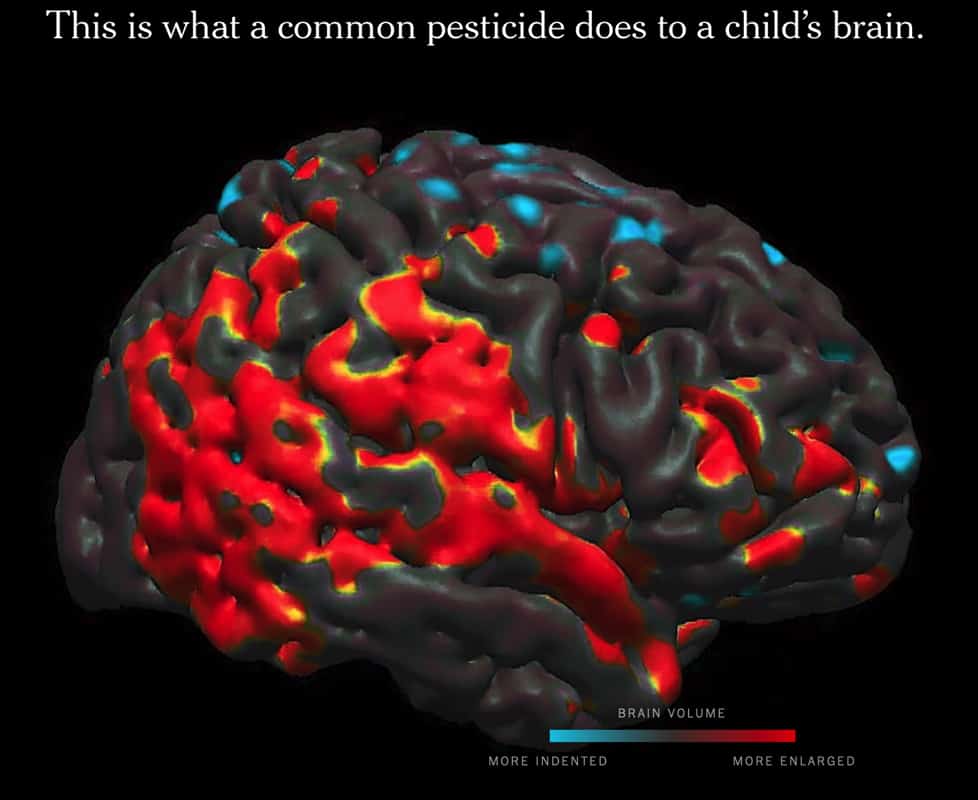
 Pamela Ferdinand
Sources
- Parental Pesticide Exposure and Childhood Brain Cancer: A Systematic Review and Meta-Analysis
- Exposure to pesticides and childhood leukemia risk: a systematic review and meta-analysis
- Residential Pesticides and Childhood Leukemia: A Systematic Review and Meta-Analysis
This article is for general informational purposes only and is not medical advice. Always consult a qualified healthcare professional before making changes to your diet or health routine.