

On this page
The woman who finally decided to try strength training after years of cardio-only workouts did everything right on paper. She showed up three times a week. She bought a set of pretty dumbbells. She followed a YouTube routine. Six months later she felt almost exactly the same, and she came to me convinced her body was just broken past forty. It wasn't. She had been training like she was afraid of herself.
The Mistake: Playing It Too Safe
This is the one I see over and over. Women over 40 who start (or return to) strength training and default to the lightest weights they can find, high rep counts, and nothing that ever feels truly hard. And I get it. There's this cultural narrative that women should be careful, that heavy weights will make you bulky (they won't), that you'll hurt yourself, that your body is more fragile now. That narrative is a lie, and it is keeping you weaker than you should be.
Here's the actual physiology: building meaningful muscle, the kind that protects your joints, keeps you functional, and supports your bone density, requires something called progressive overload. That means you have to consistently challenge your muscles beyond what they are already comfortable doing. If the last three reps of your set don't feel genuinely hard, the weight is too light. Period.
A 2022 systematic review published in the British Journal of Sports Medicine confirmed that resistance training in midlife and older women is not only safe, it is one of the most effective tools we have for maintaining muscle mass, improving physical function, and supporting bone mineral density. The research isn't timid about this. The women who made the most gains were the ones who trained at moderate-to-high intensity, not the ones who stuck to tiny pink dumbbells forever.
Why This Mistake Is So Easy to Make
First, the fitness industry has spent decades selling women on cardio as the path to a smaller body. Treadmills, step classes, endless elliptical sessions. Strength training was the thing the men did on the other side of the gym. That conditioning runs deep.
Second, there's real fear. Fear of injury, fear of looking dumb, fear of bulking up. I've heard all three from clients. And when you're in your forties or fifties and your knees are talking to you more than they used to, erring on the side of light and easy feels like the responsible choice.
Third, most beginner programs genuinely are appropriate at first, so early-stage light training isn't wrong. The mistake is staying there. The problem isn't starting with a ten-pound dumbbell. The problem is still using that same ten-pound dumbbell eight months later and wondering why nothing has changed.
What actually happens in your body after 40 makes this urgency even clearer. We naturally begin losing muscle mass, a process called sarcopenia, starting as early as our thirties and accelerating after menopause. The National Institute on Aging notes that adults can lose up to 3 to 5 percent of muscle mass per decade without adequate resistance training. That loss is not cosmetic. It affects your balance, your metabolic function, your ability to carry groceries, and eventually your independence. Staying in the comfortable, easy zone doesn't protect you from that. It just makes it happen faster.
The Fix: Train Like You Mean It (With Smart, Not Reckless, Intensity)
The fix is not to walk into a gym and try to deadlift your body weight tomorrow. I am not telling you to be reckless. I am telling you to be honest about when "safe" has quietly become "stagnant."
Here is what I actually coach:
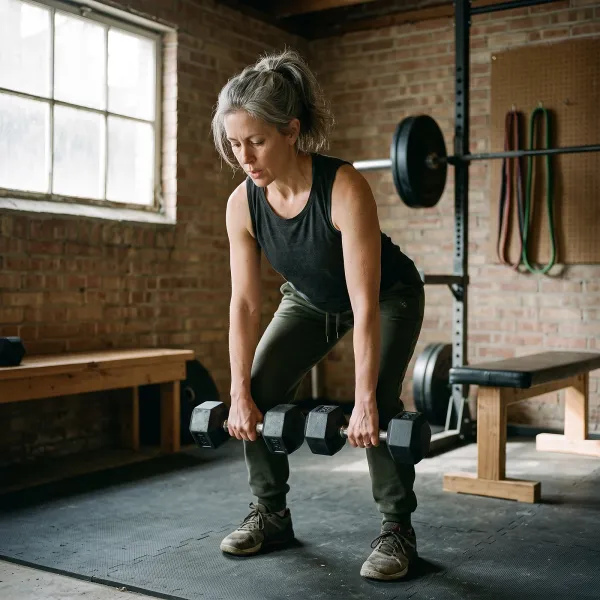
Pick compound movements first. Squats, hip hinges (deadlifts, Romanian deadlifts), rows, presses. These recruit the most muscle at once, which means the most stimulus for your time and the most benefit for your bones. Isolation moves like bicep curls are fine, but they shouldn't be the whole program.
Use the "last two reps" test. When you do a set of 8 to 12 reps, the last two should feel genuinely challenging. Not painful, not form-breaking, but hard. If you could do six more, the weight is too light. Increase it, even by five pounds. Even by two. Keep moving the bar.
Progress on a schedule, not a feeling. Feelings will lie to you. Make it a rule: every two to four weeks, assess whether you can add a little more weight or one more rep. That's progressive overload in the simplest possible form.
Two to three days a week is enough to start. You do not need to live in the gym. A 2019 review in Medicine and Science in Sports and Exercise showed that even two days per week of resistance training produces significant strength and muscle gains in untrained individuals. Show up consistently and push yourself, and two days will do more than five lazy days ever will.
Prioritize rest and recovery. This is where over-40 training actually does look a bit different. Not because your muscles are weaker or more delicate, but because your recovery timeline can be slightly longer. Sleep, real food with adequate protein, and rest days are not optional accessories. They are where the adaptation actually happens. Training breaks tissue down; recovery builds it back stronger.
What This Has to Do With Your Bones (And Why Nobody Talks About It Enough)
Muscle and bone are not separate conversations. They are deeply linked. When you load your skeleton through resistance training, the mechanical stress signals your bones to maintain and even increase density. This is called the mechanostat theory, and it's been well-supported in research for decades.
For women over 40, this matters enormously. Bone density peaks in our late twenties and thirties, and we can lose it steadily after that, especially in the years around perimenopause. Osteoporosis and its precursor, osteopenia, are not just old-lady problems. They begin quietly, years before a diagnosis shows up on a DEXA scan. Weight-bearing resistance training, the kind where you are actually loading your body with real effort, is one of the most researched and consistently supported tools for protecting that density.
A meta-analysis in Osteoporosis International found that progressive resistance training had a meaningful positive effect on bone mineral density at the lumbar spine and femoral neck in postmenopausal women. That's the hip, the place where fractures become life-altering.
This is why I get a little fired up when I see women over 40 spending an hour doing light yoga flows and calling it their "strength" day. Yoga has real value. Flexibility matters. But it does not load your skeleton the way resistance training does. Both can live in your week. Just don't let one pretend to be the other.
A Word on Form, Ego, and Starting Where You Are
None of this is permission to skip learning how to move correctly. Form first, always. A squat with your own bodyweight, done well, does more for you than a loaded squat with a caved-in knee. If you are brand new to this or coming back from a long break, invest in a few sessions with a qualified trainer, watch good instructional content from credible coaches, and learn the basics before you add load.
But here's what I want you to hold onto: you are not too old, too broken, or too far behind. The body God gave you has remarkable capacity to adapt and rebuild at every decade. I've seen women in their fifties build more functional strength than they had at thirty-five, because they finally stopped treating themselves like they were made of glass.
The research backs it. Your design supports it. The only thing left is to actually do it.
The Practical Starting Point
If you're staring at this and thinking "okay but where do I actually begin," here's what I'd tell a client sitting across from me:
Week one through two: pick three compound movements, use a weight that challenges you by rep eight of ten, and do two sets of each. Learn the patterns. Squat, hinge, row. That's it.
Week three onward: add a set, increase the weight if the last two reps are easy, and track what you do. A notes app works fine. You need to know what you did last week so you can beat it this week.
Every four weeks: check in. How do you feel going up stairs? Carrying bags? Are you sleeping better? Is your posture shifting? These are the real metrics that tell you the program is working, long before the scale budges or your jeans change.
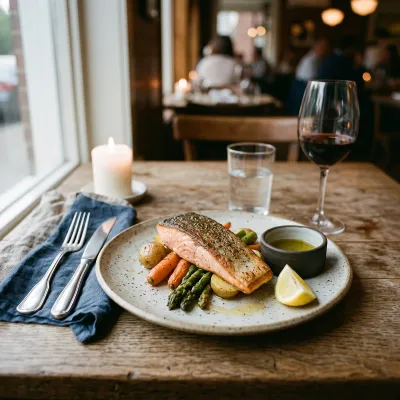
And eat enough protein. Muscle doesn't build out of thin air. Aim for at least 0.7 to 1 gram of protein per pound of bodyweight on training days. Real food sources: eggs, grass-fed beef, wild salmon, chicken thighs, sardines. Your muscles need the raw materials.
This is not complicated. It's just consistent. And you are more capable of it than anyone may have told you.
This article is for general informational purposes only and is not medical advice. Always consult a qualified healthcare professional before making changes to your diet or health routine.
Key Takeaways
- The most common strength training mistake women over 40 make is staying at too-low intensity for too long, keeping workouts comfortable instead of challenging.
- Building muscle after 40 requires progressive overload, consistently increasing weight or reps so muscles are genuinely challenged.
- Two to three days a week of resistance training is enough to produce real strength and muscle gains when intensity is appropriate.
- Resistance training is one of the best-researched tools for protecting bone density, which becomes critical in perimenopause and beyond.
- Compound movements (squats, hinges, rows, presses) give you the most benefit per session and should anchor any program.
- Adequate protein from real food sources is non-negotiable for muscle adaptation and recovery.
Frequently Asked Questions
Is it safe to lift heavy weights after 40?
Yes, for most women, progressive resistance training at moderate to high intensity is safe and well-supported by research. The key is learning proper form before adding significant load, progressing gradually, and listening to your body. A few sessions with a qualified trainer when you're starting out is a worthwhile investment. Always check with your healthcare provider if you have an existing injury or health condition before starting a new exercise program.
How many days a week should women over 40 strength train?
Two to three days a week is a well-researched and effective starting point. Consistency and quality of effort matter far more than frequency. Rest and recovery between sessions are where muscle adaptation actually happens, so don't skip them in favor of more days.
Will strength training make women over 40 look bulky?
This is one of the most persistent fitness myths out there. Women have significantly lower testosterone levels than men, which makes the kind of large muscle bulk you see in male bodybuilders essentially impossible without pharmaceutical assistance. What strength training does produce is a leaner, more defined appearance, better posture, and improved functional capacity.
How much protein do women over 40 need when strength training?
General coaching guidance and much of the sports nutrition research suggests a target of 0.7 to 1 gram of protein per pound of bodyweight on training days as a reasonable starting range for active women. Whole food sources like eggs, grass-fed beef, wild-caught fish, and chicken are great foundations. Individual needs vary, so working with a healthcare provider or registered dietitian for personalized guidance is always a smart move.
Sources
- British Journal of Sports Medicine: Effects of resistance training on muscle mass, strength, and physical function in older women: a systematic review
- National Institute on Aging: Exercise and Physical Activity: Getting Fit for Life
- Medicine and Science in Sports and Exercise: Resistance Training Volume Enhances Muscle Hypertrophy but Not Strength in Trained Men
- Osteoporosis International: Effect of progressive resistance training on bone mineral density in postmenopausal women: a meta-analysis
This article is for general informational purposes only and is not medical advice. Always consult a qualified healthcare professional before making changes to your diet or health routine.