

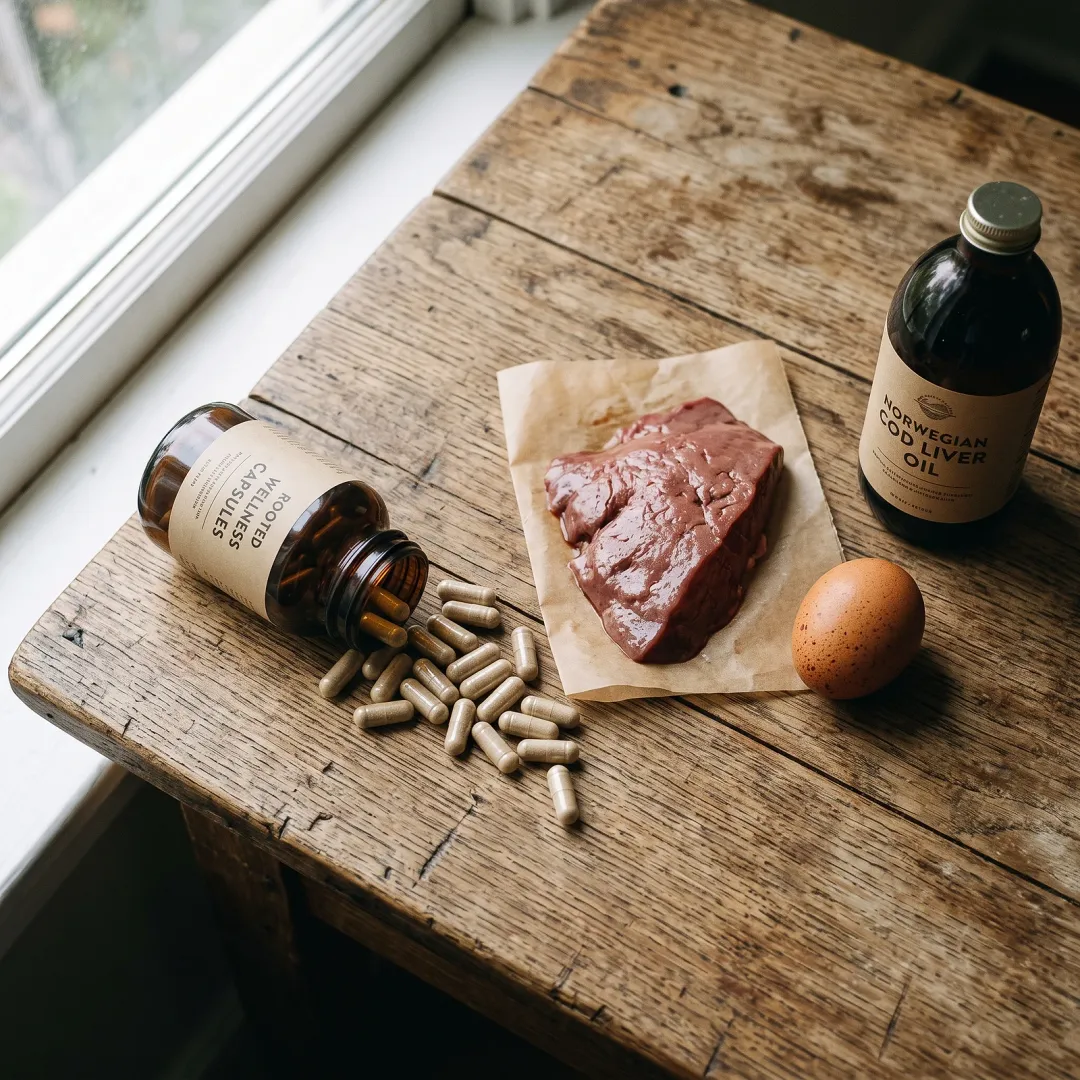

Millions of people trust they are getting their vitamin D. They take the pill, check the box, and assume the job is done. New research says that assumption may be costing them the very thing they are trying to fix.
The Study Nobody in the Supplement Aisle Is Talking About
A study covered by ScienceDaily dropped recently and it barely made a ripple. The finding: taking vitamin D2, one of the two main forms sold in supplements and commonly prescribed by doctors, can actually lower your circulating levels of vitamin D3. The form your body makes from sunlight. The form researchers consistently find to be more effective at raising total vitamin D status.
Read that again. You take a vitamin D supplement. That supplement, depending on which form it contains, may be working against your body's own D3 levels.
The researchers also noted that prior studies suggest D3 may provide stronger immune support. So the form that dominates prescription vitamin D in this country, D2, may be both less effective and potentially counterproductive.
This is not a fringe claim from a wellness blog. This is peer-reviewed science. And yet the majority of prescription vitamin D in the U.S. is still written as D2. Go figure.
This article is for general informational purposes only and is not medical advice. Always consult a qualified healthcare professional before making changes to your diet or health routine.
D2 vs. D3: A Quick Primer So You Know What You're Looking At
Vitamin D is a fat-soluble nutrient your body needs for bone density, immune function, mood regulation, and a whole lot more. But the label "vitamin D" covers two very different compounds.
Vitamin D3 (cholecalciferol) is the form your skin synthesizes when it is exposed to UVB sunlight. It is also found in animal-based foods: beef liver, egg yolks, fatty fish, and cod liver oil. This is the form your body recognizes and uses most efficiently. Research has consistently shown that D3 is more effective at raising and sustaining blood levels of 25-hydroxyvitamin D, the marker your doctor measures, compared to D2. A 2012 review published in the American Journal of Clinical Nutrition found D3 to be approximately 87 percent more potent than D2 at raising and maintaining overall vitamin D levels.
Vitamin D2 (ergocalciferol) is derived from plant sources, typically UV-irradiated yeast or fungi. It is cheaper to manufacture. It is the form most commonly used in fortified foods like milk and cereal. And it is the form most commonly prescribed by physicians in the U.S. as high-dose "vitamin D" therapy.
Those two facts, cheaper to make and doctor-prescribed, are not coincidental.
Follow the Money
Pharmaceutical-grade vitamin D2, sold under the brand name Drisdol and as generic ergocalciferol, is the version that flows through the prescription pipeline. It requires a prescription at high doses, which means it goes through insurance billing, pharmacy dispensing, and physician prescribing. That pipeline generates revenue in ways that a D3 softgel you grab off a shelf at a health food store simply does not.
D2 is also heavily relied upon in fortified food manufacturing. The FDA's list of approved nutrient additives allows D2 as the standard fortification form for foods like dairy alternatives and breakfast cereals. Major food manufacturers use it because it is cheaper and shelf-stable. The same processed-food companies that profit from "fortified" ultra-processed products have zero financial incentive to reformulate around D3.
Meanwhile, the USDA dietary guidelines continue to point people toward fortified foods as a primary vitamin D source without drawing a meaningful distinction between D2 and D3 for the general public. The agencies that are supposed to help you navigate this stuff are pointing you at the cheaper, potentially less effective form, and not telling you why.
Nobody in that chain is saying the quiet part loud. They don't have to. The system as it stands, with D2 as the default, keeps the revenue flowing and keeps you dependent on a prescription for something your body was literally designed to make from sunlight.
The Fortified Food Shell Game
Here is something that drives me absolutely crazy. Processed-food manufacturers fortify their products with synthetic vitamins, often the cheaper forms, and then market those products as a health choice. "A good source of vitamin D" on a box of cereal. Vitamin D added back to a dairy alternative made from seed-oil-laden oat slurry. And the form they're using is D2, the form the new research suggests may suppress your D3.
This is the fortification shell game. Strip the nutrition out during processing. Add back the cheapest synthetic version. Slap a health claim on the front of the box. Charge a premium.
It has been going on for decades, and it works because most people, reasonably, trust that "fortified with vitamin D" means something good is happening. The fine print, the form, the bioavailability, the fact that it might be working against your natural D3, never makes it onto the front panel.
Real food does not need a fortification label. Beef liver is one of the most nutrient-dense foods on the planet and it contains naturally occurring D3 along with a full spectrum of fat-soluble vitamins in forms your body actually recognizes. Egg yolks. Cod liver oil. These are not supplements, they are food, and they come packaged with the co-factors that help your body use what it is getting. That is not an accident. That is design.
The Sunlight Problem Nobody Wants to Solve
The most efficient way to get vitamin D is still sunlight on bare skin. Your body produces D3 directly from UVB exposure and it self-regulates, it will not overproduce. A review in the journal Nutrients found that regular, moderate sun exposure remains the most physiologically appropriate way to maintain vitamin D status for most people.
But we have built a culture that actively works against this. Office jobs. Sun avoidance messaging that started in the 1980s and never let up. Sunscreen applied before any meaningful UVB exposure can occur. Kids inside with screens instead of outside in the yard. The result is a population that is chronically low in vitamin D, and the prescribed solution is a cheap synthetic pill that, based on the new research, may be making things worse.
I am not telling you to skip sunscreen or ignore your dermatologist. But I am saying the answer to widespread vitamin D deficiency is not D2 pills and fortified cereal. The answer is more time outside, real food that contains D3 naturally, and if you supplement, making sure you are taking the right form.
Talk to your doctor about testing your 25(OH)D levels, asking specifically whether your supplement contains D2 or D3, and determining whether your current dose and form are actually moving your number in the right direction.
What to Actually Do Right Now
First, check your supplement. Flip it over and look at the supplement facts panel. It will say either "ergocalciferol" (D2) or "cholecalciferol" (D3). If it says ergocalciferol, you are taking D2. Bring that to your next doctor's appointment and ask whether switching to D3 makes sense for you.
If you have a prescription for high-dose vitamin D, do not stop taking a prescribed medication without talking to your prescribing doctor. What you can do is ask, specifically, why D2 was chosen over D3, and reference the recent research.
Second, look at your food. Grass-fed beef liver, pastured egg yolks, and cod liver oil are real-food sources of naturally occurring D3 and the fat-soluble co-factors that go with it. These are not supplements with a bioavailability question mark. These are foods humans have eaten for thousands of years.
Third, get some sun. Not burn-your-skin sun, not hours-long unprotected exposure. But fifteen to thirty minutes of midday sun on your arms and legs a few times a week, without sunscreen applied at the very start, can support meaningful D3 production depending on your latitude, skin tone, and time of year. The NIH Office of Dietary Supplements acknowledges sun exposure as a primary source of vitamin D for most people.
Fourth, get your levels tested. "Vitamin D" deficiency is incredibly common and most people have no idea where they actually stand. A 25-hydroxyvitamin D blood test is standard and widely available. Know your number before you assume the supplement you've been taking is doing its job.
The body God gave you was designed to get vitamin D from sunlight and real food. The modern supplement industry, the fortification pipeline, and the prescription default to D2 are not improvements on that design. They are workarounds that serve manufacturing economics more than they serve you.
Key Takeaways
- New research suggests vitamin D2, the form most commonly prescribed and used in fortified foods, may lower your body's D3 levels rather than supplement them.
- Vitamin D3 (cholecalciferol) is the form your body makes from sunlight and research consistently finds it more effective at raising vitamin D status than D2.
- The prescription-default to D2 and its use in cheap fortified foods follows a clear economic logic: D2 is less expensive to manufacture and flows through profitable billing pipelines.
- Real-food D3 sources include beef liver, pastured egg yolks, and cod liver oil. These come packaged with co-factors your body uses.
- Check your supplement label for 'cholecalciferol' (D3) vs. 'ergocalciferol' (D2), get your 25(OH)D levels tested, and ask your doctor whether your current form and dose are actually working.
Frequently Asked Questions
What is the difference between vitamin D2 and vitamin D3?
Vitamin D2 (ergocalciferol) is derived from plant sources like UV-irradiated yeast and is the form most commonly used in prescription vitamin D and many fortified foods. Vitamin D3 (cholecalciferol) is the form your skin produces from sunlight and is found naturally in animal foods like beef liver, egg yolks, and cod liver oil. Research has consistently found D3 to be more effective at raising and sustaining blood levels of vitamin D. New findings suggest D2 may actually lower D3 levels in the body.
Why do doctors prescribe vitamin D2 instead of D3?
Vitamin D2 is less expensive to manufacture and has historically been the pharmaceutical-grade form available by prescription at high doses. It is not necessarily prescribed because it is more effective. In fact, research suggests D3 is more potent. It is worth asking your prescribing doctor specifically whether D3 might be a better fit for you and getting your 25(OH)D levels tested to see whether your current supplement form is actually moving your numbers.
What foods are naturally high in vitamin D3?
The best real-food sources of naturally occurring D3 include beef liver, pastured egg yolks, cod liver oil, and fatty fish. These foods also tend to come packaged with fat-soluble co-factors that support absorption, something a synthetic supplement does not replicate. Grass-fed and pasture-raised sourcing tends to produce higher nutrient density across the board.
How do I know if my vitamin D levels are actually low?
Ask your doctor for a 25-hydroxyvitamin D blood test, sometimes written as 25(OH)D. This is the standard way to measure vitamin D status. Do not assume a supplement is working without actually testing your levels. Many people take vitamin D for years without knowing whether the form, dose, or absorption is getting them where they need to be. Testing is the only way to know.
Sources
- ScienceDaily: Scientists warn a popular vitamin D supplement may have a hidden downside
- American Journal of Clinical Nutrition: Vitamin D3 is more potent than vitamin D2 in humans (2012 review)
- Nutrients (MDPI): Sunlight and Vitamin D: Necessary for Public Health (review)
- NIH Office of Dietary Supplements: Vitamin D Fact Sheet for Health Professionals
- U.S. FDA: Food Additive Status List
- Dietary Guidelines for Americans: USDA Dietary Guidelines (current edition)
This article is for general informational purposes only and is not medical advice. Always consult a qualified healthcare professional before making changes to your diet or health routine.



Join the conversation
What do you think?
Free members can comment, reply and like. It takes ten seconds.